
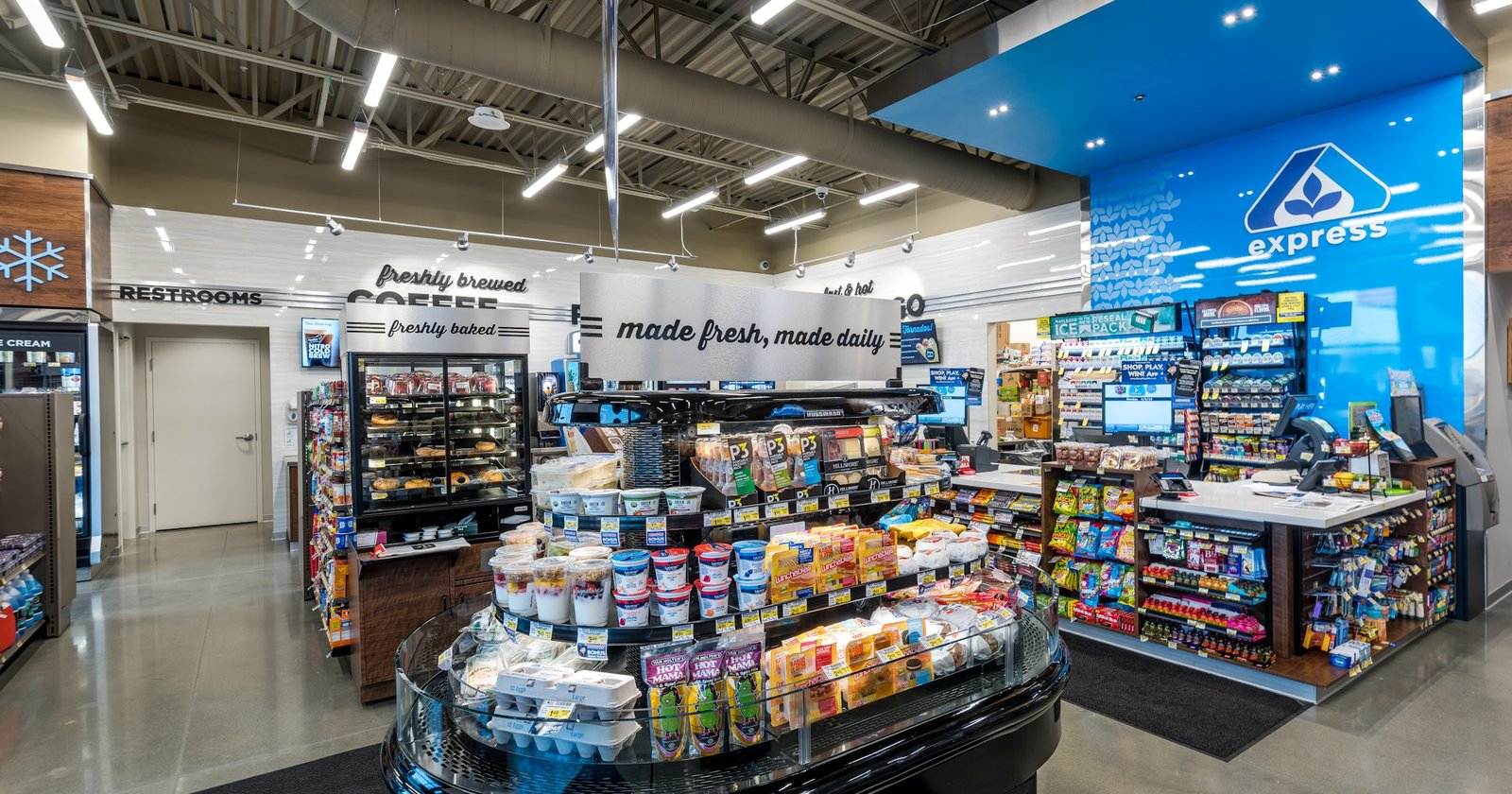
A fast-turn C-store rebrand converts newly acquired stores to the parent brand on a standardized ~90-day playbook: survey, design, production art, and installation run in parallel so speed doesn’t come at the cost of compliance or brand quality.
Executive summary
In convenience retail, acquisitions close faster than stores convert. The deal signs, the announcement goes out, and dozens, sometimes hundreds, of locations sit under the old banner, eroding brand equity with every passing day.
Operators who win the integration race treat rebranding as a repeatable program, not a series of one-off projects. A standardized interior rebrand kit covers signage, décor, and fixture overlays, while a streamlined discovery-to-production workflow compresses time-to-convert without sacrificing compliance with landlord requirements, ADA standards, or brand guidelines.
What is a fast-turn rebrand?
A fast-turn C-store rebrand is the rapid, standardized conversion of newly acquired stores to an established parent brand, often targeting roughly 90 days per store or wave. Instead of treating each location as a standalone project, operators run a single repeatable playbook: site survey, design adaptation, production art, kitting, and installation. Speed comes from removing ambiguity, not from rushing the work.
Requirements & common pitfalls
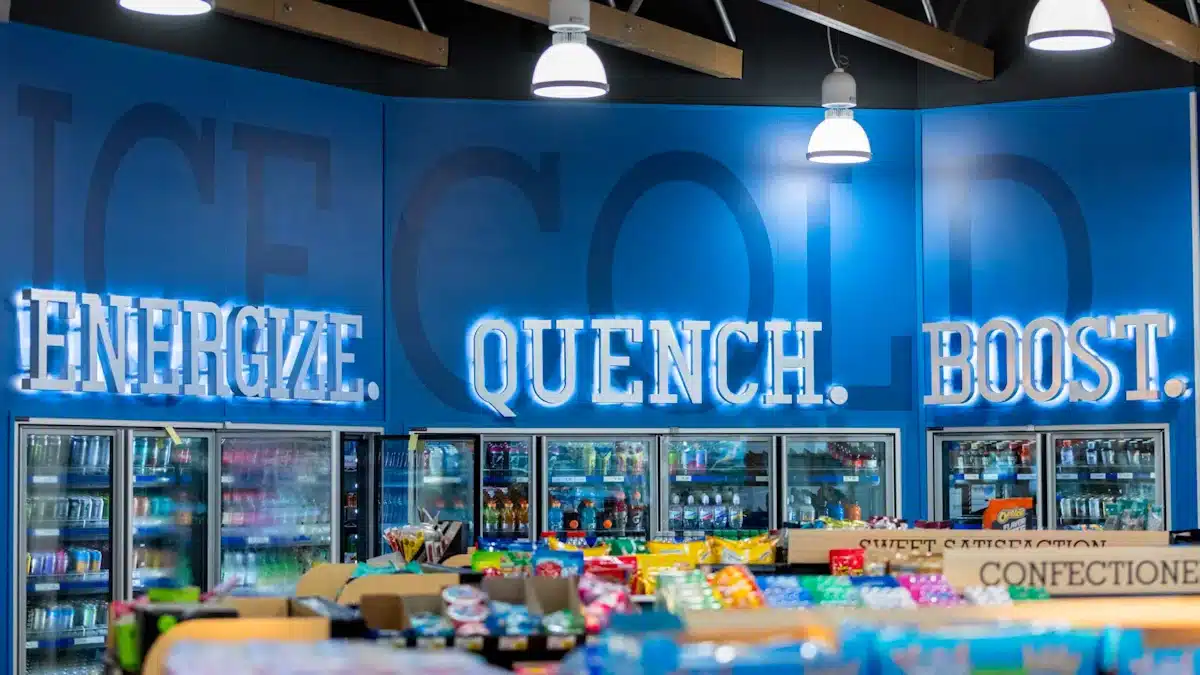
A post-acquisition rebrand is not a remodel. The objective is conversion: getting an acquired store to look, feel, and function like the parent brand quickly, across locations never built to a common standard. Every site must satisfy landlord and lease conditions, clear local sign permitting, meet ADA standards, and land within brand guidelines, often simultaneously and across jurisdictions. The most common pitfalls all trace back to treating each store as a custom project:
- Skipping the site survey. Assuming uniformity leads to mis-kitted materials, field remakes, and install delays.
- Running approvals sequentially. The single most common reason a 90-day plan slips.
- Fragmenting vendors. Separate suppliers create coordination gaps and diffuse accountability.
- Deferring ADA and code review. Discovering it mid-install is expensive and entirely avoidable.
Too many stores. Too many vendors. One better plan.
Simplify my rollout →It takes a coordinated team
No single firm converts an acquired store alone. A complete rebrand runs on parallel workstreams, each with its own specialists, lead times, and approval paths. The mistake is not using multiple partners. That’s unavoidable. The mistake is letting those workstreams run on separate clocks. KRS owns the interior conversion and coordinates it with the others, sharing survey data and flagging dependencies early.
| Workstream | Typically owned by |
|---|---|
| Interior conversion: décor, fixtures, overlays, signage, kitting, install | KRS |
| Exterior signage & canopy | Sign vendor / operator |
| Permitting & landlord approvals | Operator / expediter |
| Site trades (electrical, refrigeration) | GC / specialty contractors |
What belongs in the interior rebrand kit
The kit turns brand standards into field-ready components. The goal isn’t to force every store into an identical package: a small urban store, a highway travel center, and a food-forward C-store all need different applications of the same brand language. It’s to build a controlled system of parts so each location can be matched to the right configuration: interior décor, fixture overlays, interior signage and wayfinding, window and door graphics, and substrate-matched hardware with documentation.
Discovery & site survey
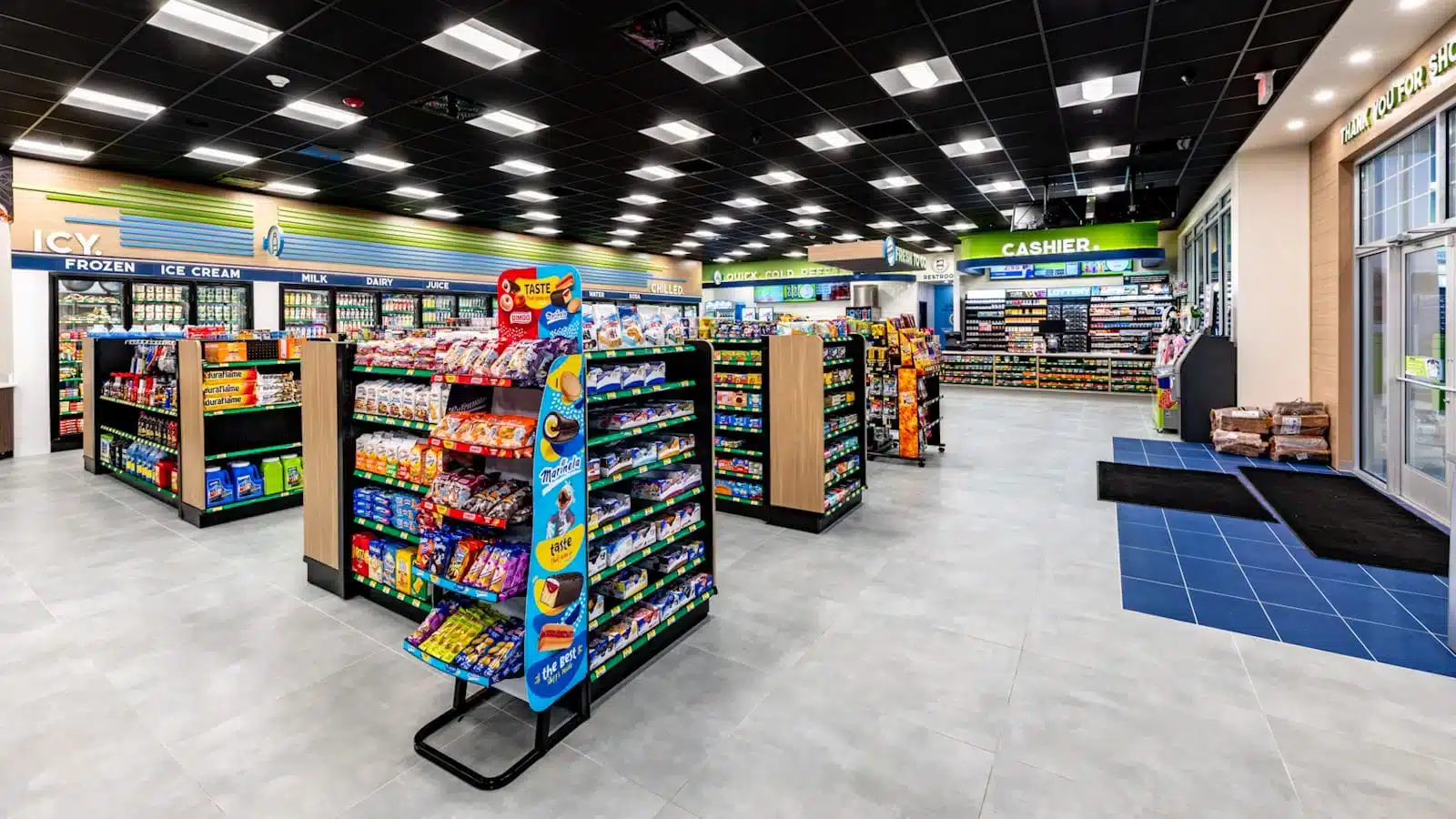
Every fast-turn program lives or dies on the quality of its front end. Increasingly the survey is a 3D digital scan rather than a tape measure: a Matterport-style scan captures the location in 4K, stores it in the cloud, and lets designers, estimators, and install leads “walk” the store remotely without a second visit. For a multi-state portfolio, that single source of truth keeps a hundred locations from each becoming a custom investigation.
“The KRS team challenged us and was right there to help determine the solutions… I’m proud, and our franchisees are excited with the new design.”
PAUL CASADONT, PRESIDENT, EXTRAMILE CS LLC
From design intent to production-ready art
A great brand standard means nothing if it can’t be reproduced reliably across a portfolio. Design intent establishes the standard: color in substrate-specific formats, typography rules, logo hierarchy, the décor system, and fixture-overlay specifications. Production art executes that standard against real, field-verified conditions. The bridge between them is detailed documentation: CAD drawings, finish schedules, dimensional sign details, and fabrication-ready files with correct bleeds and cut paths. A quality-control gate before production confirms the art matches the approved direction and the surveyed site conditions, so design intent translates cleanly into manufacturable components as a program scales from a pilot to 50 stores and beyond.
Compressing approvals without cutting corners
Approvals are where fast-turn rebrands most often stall, and the fix is procedural, not technical. The highest-leverage move is parallel submission: route landlord packages, permit applications, and internal sign-off simultaneously, not as a dependent chain. Pre-approved kit architecture lets per-store submissions reference an already-approved design package, and jurisdiction pre-screening surfaces the slow municipalities early so they don’t quietly dictate the whole schedule.
Kitting & install orchestration
Execution is where rollout programs either hold together or fall apart. It starts with a master Bill of Materials keyed to survey data and versioned per store. Store-specific kitting is the foundation: every component packaged, labeled, and verified before it leaves the warehouse. From there, multi-state installation depends on four things working in concert:
- Sequencing by readiness. Schedule around site conditions, kit completeness, and permit status, not just crew availability.
- Geographic routing. Group locations into corridors so crews roll through adjacent territory.
- Regional staging. Separate Pre-position kits near their stores so crews never wait on materials.
- Per-store QC closeout. A photo package checked against the original survey before crews leave the region.
A 90-day timeline
Every acquisition is different, but a 90-day framework gives teams a practical planning model. The number of days in any phase matters less than the overlap between phases. The fastest programs run survey, approvals, design adaptation, and production planning in parallel.
| Phase | Weeks |
|---|---|
| Discovery & 3D survey | 1–3 |
| Design adaptation & production art | 3–5 |
| Approvals (parallel) | 4–7 |
| Production & regional staging | 6–9 |
| Store prep & installation | 8–12 |
| Close-out | 12–13 |
Risk mitigations & what to measure
Fast does not mean loose. In acquired-store conversions, speed comes from reducing ambiguity, and the most effective mitigations are built into the program rather than bolted on: begin sign and ADA review at close, use one survey standard across all locations, require production-art review before fabrication and pre-shipment QA, and sequence installs by readiness. To know whether the program is working, track time-to-convert, on-time installation percentage, defect and remediation rates, and permitting and ADA compliance across the portfolio.
Case snapshots
Recent KRS programs show how a systematized approach supports both brand expression and operational scale.
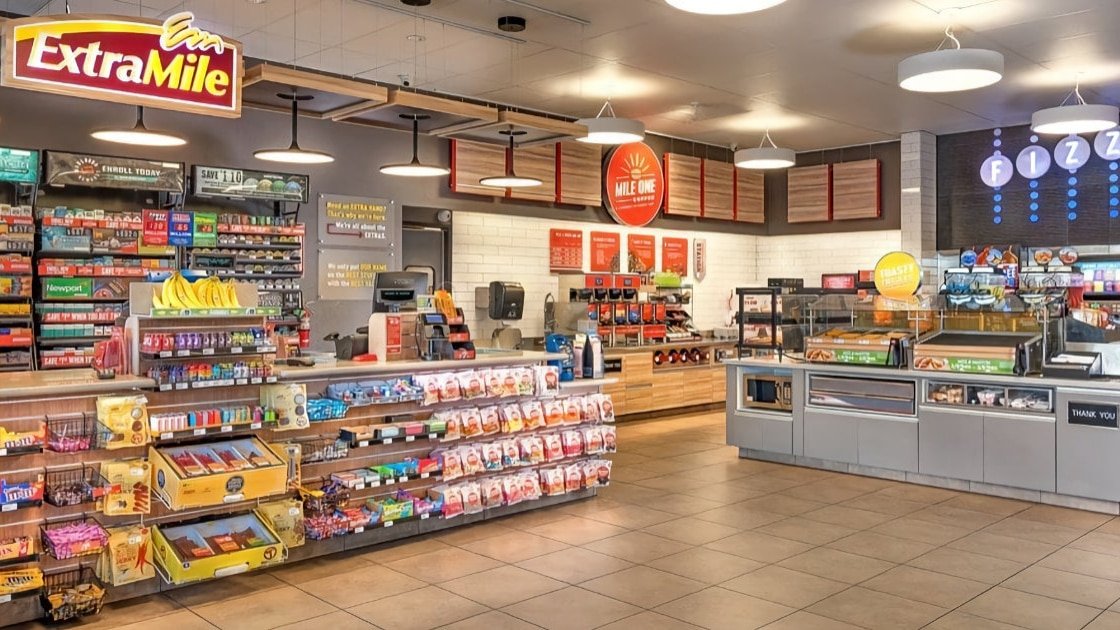
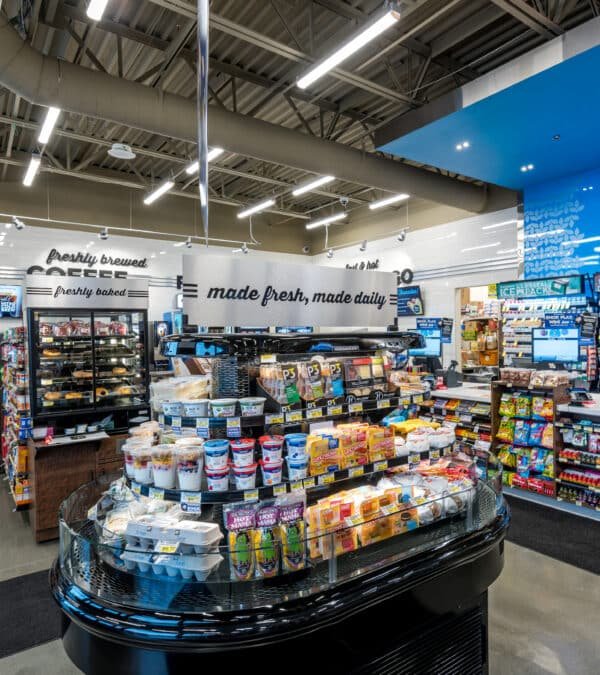
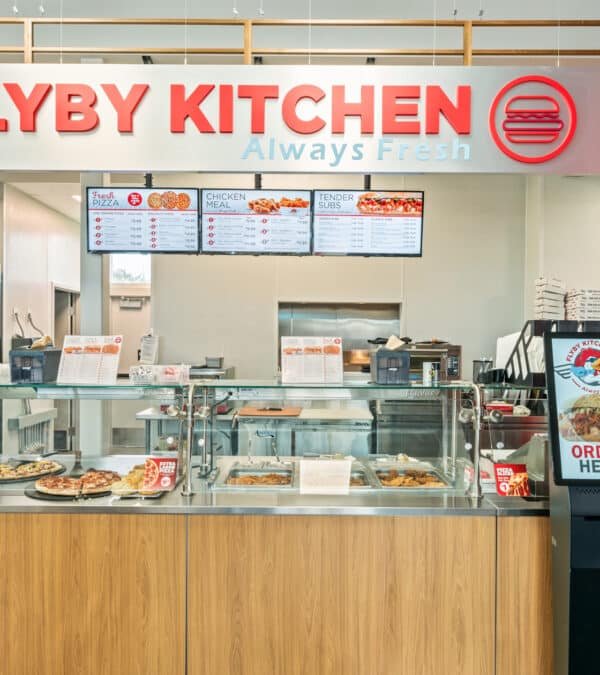
For ExtraMile, a joint venture between Chevron and Jacksons Food Stores spanning more than 800 locations across the western U.S., KRS led a comprehensive rebrand and built a scalable store design deployable across 300-plus franchisee sites. The program delivered consistency with enough flexibility for local customization, exactly the balance an acquisition-driven portfolio requires.
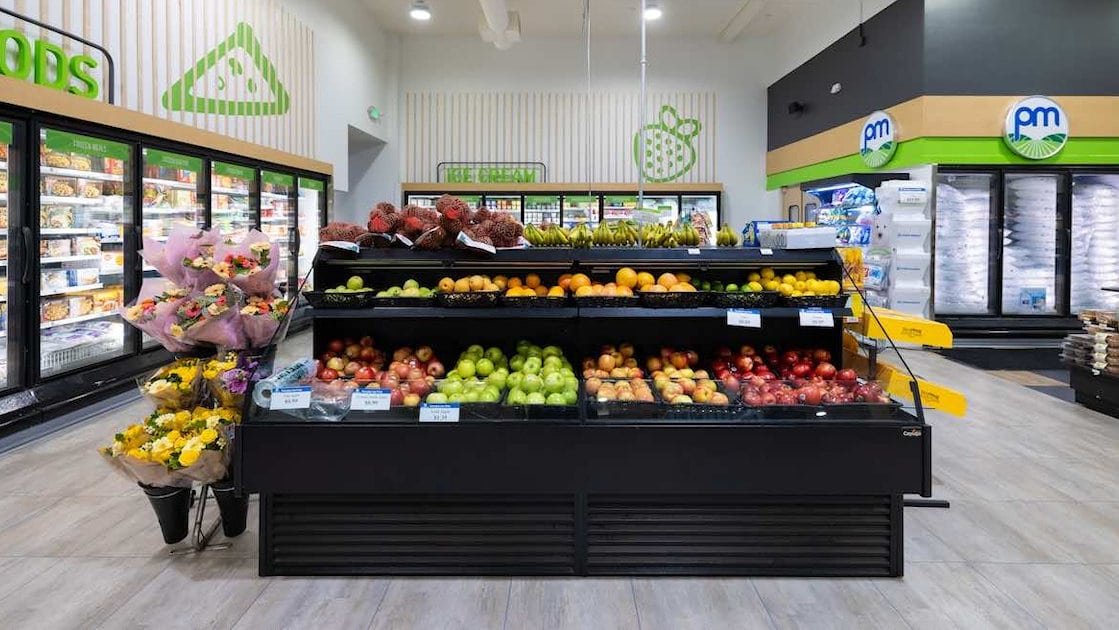
The Power Market concept illustrates how modular millwork and décor can function as a repeatable blueprint rather than a one-off, scaling a fresh brand identity across multiple footprints while holding layout logic and brand presence consistent.
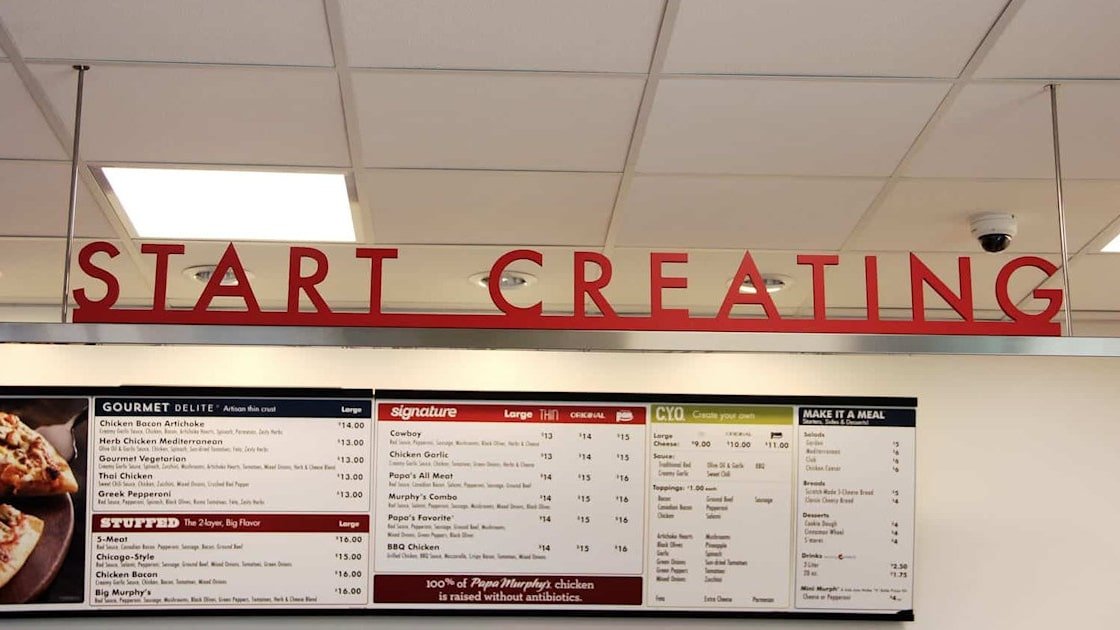
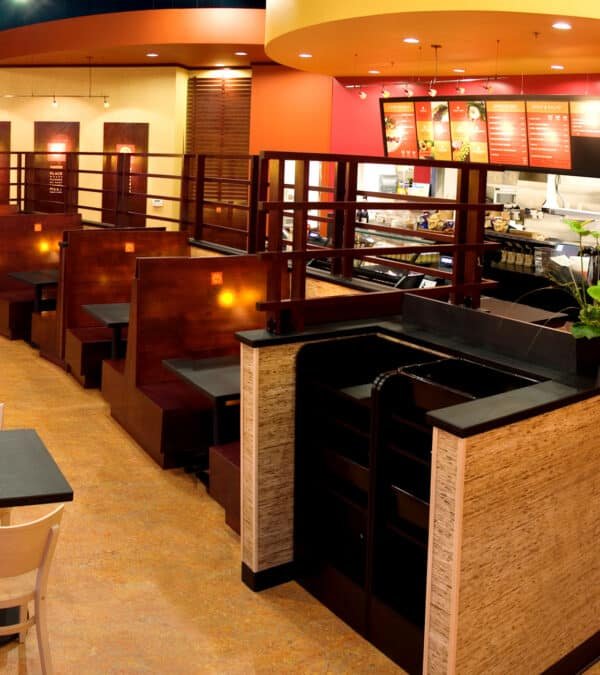
And in Papa Murphy’s ambitious nationwide remodel rollout, KRS replaced the burden of managing multiple vendors, contractors, and franchise contacts internally with a single, consolidated approach, maximizing results while protecting the bottom line. That consolidation of accountability is the same advantage acquiring operators need when converting stores at speed.
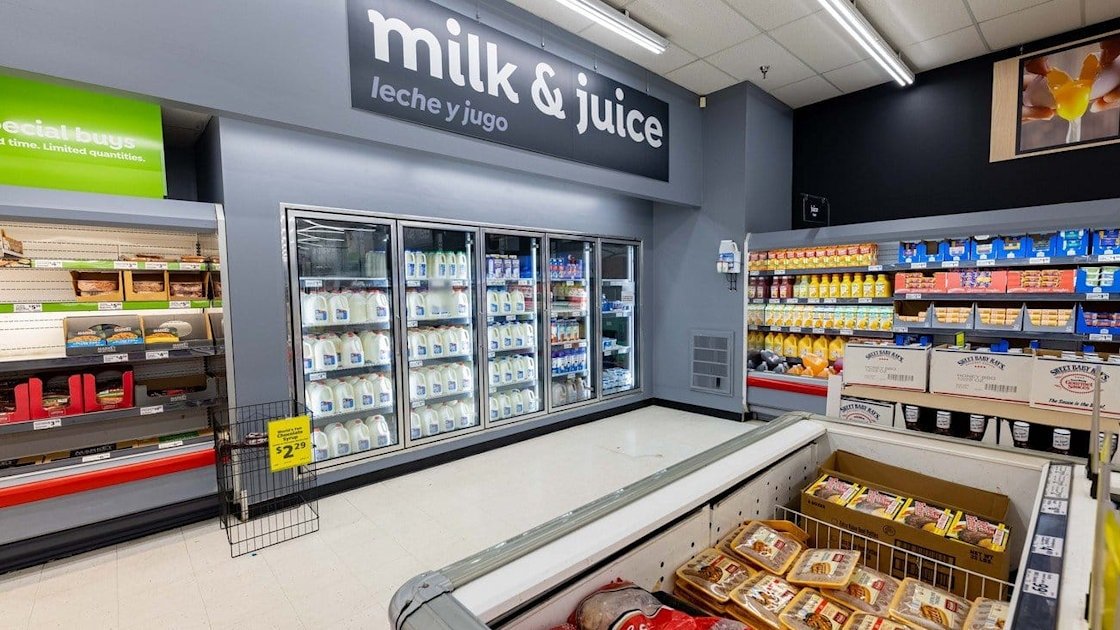
The clearest parallel to an acquisition conversion comes from the grocery industry. When Fresh Encounter acquired 52 Save A Lot stores in the Tampa Bay area, the operator needed them converted to the updated brand fast, on budget, and with minimal disruption. KRS ran the program as a single system: a 3D site survey of every location, custom-fit décor and fixtures to prevent install-day surprises and rework; a dedicated client-services team as the single point of contact keeping approvals to one or two days; in-house U.S. fabrication that absorbed 2021 supply-chain shocks; and certified crew leads overseeing local installation.
Most of the work finished in six months, on schedule. Tellingly, the only elements that ran late were outside KRS’s control: refrigeration units delayed by the supply chain, and exterior signs held up by local permitting. The format is grocery rather than convenience, but the playbook (survey-driven accuracy, consolidated accountability, flexible fabrication, and certified crews, with permitting as the likeliest external constraint) transfers directly to a c-store rollout.
Key takeaways
Post-acquisition, the cost of a slow conversion is paid in lost brand equity, customer confusion, and compounding rework every day a store stays under the old banner. A fast-turn program reverses it, running survey, design intent, production art, and installation on a single playbook, supported by a standardized kit, parallel approvals, store-specific kitting, pre-shipment QA, and coordinated national crews. The discipline that creates speed is the same discipline that protects quality.
How KRS supports acquisition rebrands
King Retail Solutions leads the interior conversion end-to-end, from site survey and design intent through production and fabrication, kitting, quality assurance, and nationwide installation of décor, fixtures, and interior signage. Because a full rebrand also depends on specialized exterior signage and permitting partners, KRS aligns its interior workstream with theirs, sharing survey data, sequencing schedules, and flagging dependencies so the pieces land together.
C-store rebrand FAQs
Have a different question? Let’s talk →What is a realistic timeline for a C-store rebrand after acquisition?
A single-store conversion to an established parent brand can often be completed in 60–90 days when permitting is straightforward. For multi-store portfolios, a 90-day pilot-to-first-wave timeline is achievable when surveys, approvals, and production move in parallel.
What belongs in a C-store rebrand kit?
A typical rebrand kit includes décor, fixture overlays, interior signage and wayfinding, window and door graphics, and mounting hardware. Components are standardized through a master Bill of Materials and versioned for each store, while exterior signage runs as a coordinated parallel workstream.
How can approvals be compressed without adding quality risk?
Approval timelines can be shortened by running landlord, permitting, and internal reviews in parallel, using pre-approved kit architecture, and developing production-ready CAD and finish schedules early. Pre-shipment QA also catches issues before materials reach the store.
What most often delays a C-store rebrand?
The most common delays come from outside the interior décor program, particularly local sign permitting and long-lead equipment such as refrigeration. Starting signage and ADA review at deal close and specifying equipment early helps keep those constraints off the critical path.
Does KRS handle exterior signage and permitting too?
KRS leads the interior conversion, including surveys, design, production, fabrication, kitting, QA, and installation of décor, fixtures, and interior signage. Exterior signage and permitting are handled through specialized partners, with KRS coordinating schedules and survey data so each workstream stays aligned.
How do you keep hundreds of stores on brand during a fast rollout?
Consistency starts with a standardized kit built from a master Bill of Materials and versioned for each location. Production art is checked against approved brand standards, and each installation closes with store-specific quality control and photo documentation before crews leave the region.
What should operators measure to know the program is working?
Key metrics include time-to-convert, on-time installation percentage, defect and remediation rates, and permitting and ADA compliance across the portfolio. Together, these show whether rollout speed is being achieved without sacrificing quality or consistency.
What other resources are available on C-store rebrands?
A few related articles and case studies worth exploring:
- Fast-Turn C-Store Rebrands: A 90-Day Conversion Playbook
- Programmatic Décor for C-Stores: Scaling Brand Consistency Without Losing Local Flavor
- How Retail Branding Drives the ROI of Store Design: The ROI of Store Design, Part One
- ExtraMile Case Study: Expressing the Brand Through Store Design
- Case Study: A Multi-Unit Grocery Store Renovation for Save A Lot