
Retail branding is the foundation of effective store design. It connects your physical space to customer expectations, builds emotional engagement, and drives measurable business outcomes. Strong branding aligns visual identity, messaging, and experience across all touchpoints, ensuring a consistent and memorable retail environment.
When executed strategically, branding influences shopper behavior, increases sales, improves customer loyalty, and enhances operational performance. By integrating holistic metrics and continuous refinement, retailers can maximize the ROI of their store design investments while maintaining flexibility to adapt to market and demographic conditions.
Retailers continue to grapple with an increasingly complex question: what is the true ROI of store design? While the term is widely used, it’s rarely approached with the depth it requires. ROI, at its core, is about connecting a range of inputs to business outcomes—then using that insight to guide future investment. In the retail environment, where branding, design, operations, and customer behavior are deeply interwoven, isolating any single factor is unrealistic.
Rather than viewing “ROI of store design” as a standalone metric, it’s more accurate to see it as a composite result—a culmination of multiple forces working together. This first installment focuses on the ROI of retail branding. Parts Two and Three explore space planning and the importance of design integrity during rollout, respectively.
Why Retail Branding Is Crucial for Store Design ROI
Branding is far more than a visual identity—it’s the foundation of a retailer’s relationship with the customer. And it’s increasingly being measured, not just intuitively, but strategically.
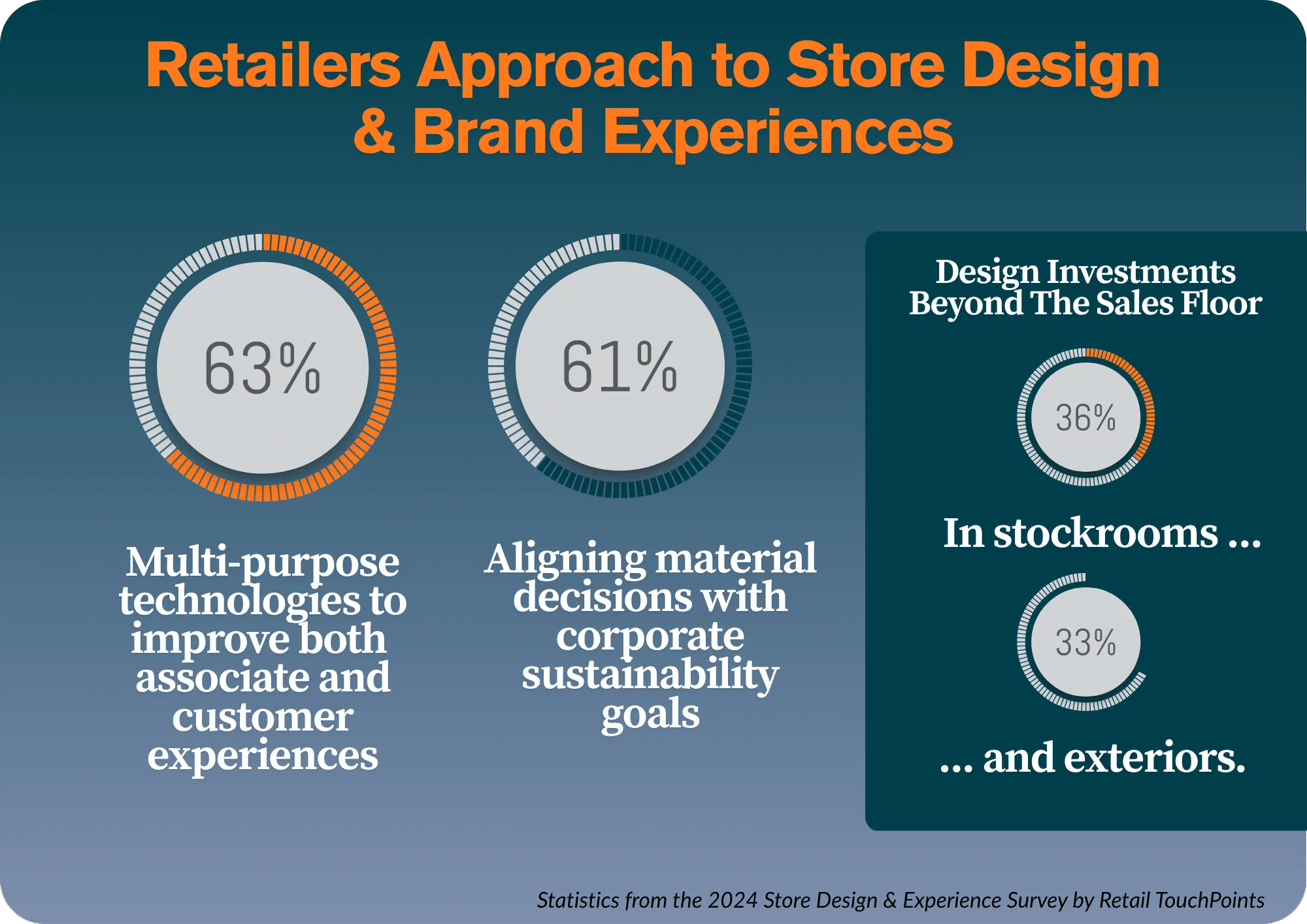
The 2024 Store Design & Experience Survey by Retail TouchPoints offers insight into into how today’s retailers are approaching the issue:
- 61% are aligning material decisions with corporate sustainability goals.
- 63% are investing in multi-purpose technologies to improve both associate and customer experiences.
- Design investments are expanding beyond the sales floor to include stockrooms (36%) and exteriors (33%), highlighting a more holistic brand experience.
These statistics reflect a broader trend: retailers are thinking about ROI as part of a total brand experience, not just a sales-per-square-foot calculation.
Why ROI in Branding Isn’t a Simple Formula
Despite rising interest in ROI measurement, there’s still no universal formula. And for good reason, as retail doesn’t operate in a vacuum. A merchandising fixture, logo update, or new flooring can’t be evaluated in isolation. Retailers can’t attribute a change in sales to a single design tweak without also accounting for supporting elements like promotions, staffing, layout, and even neighboring product categories.
Retail branding is part of a retail ecosystem, and its ROI must be considered in context. For example, increased wine sales might impact cheese sales next to them. Isolating one variable while ignoring others leads to misleading conclusions.
Branding in Action: ExtraMile Case Study

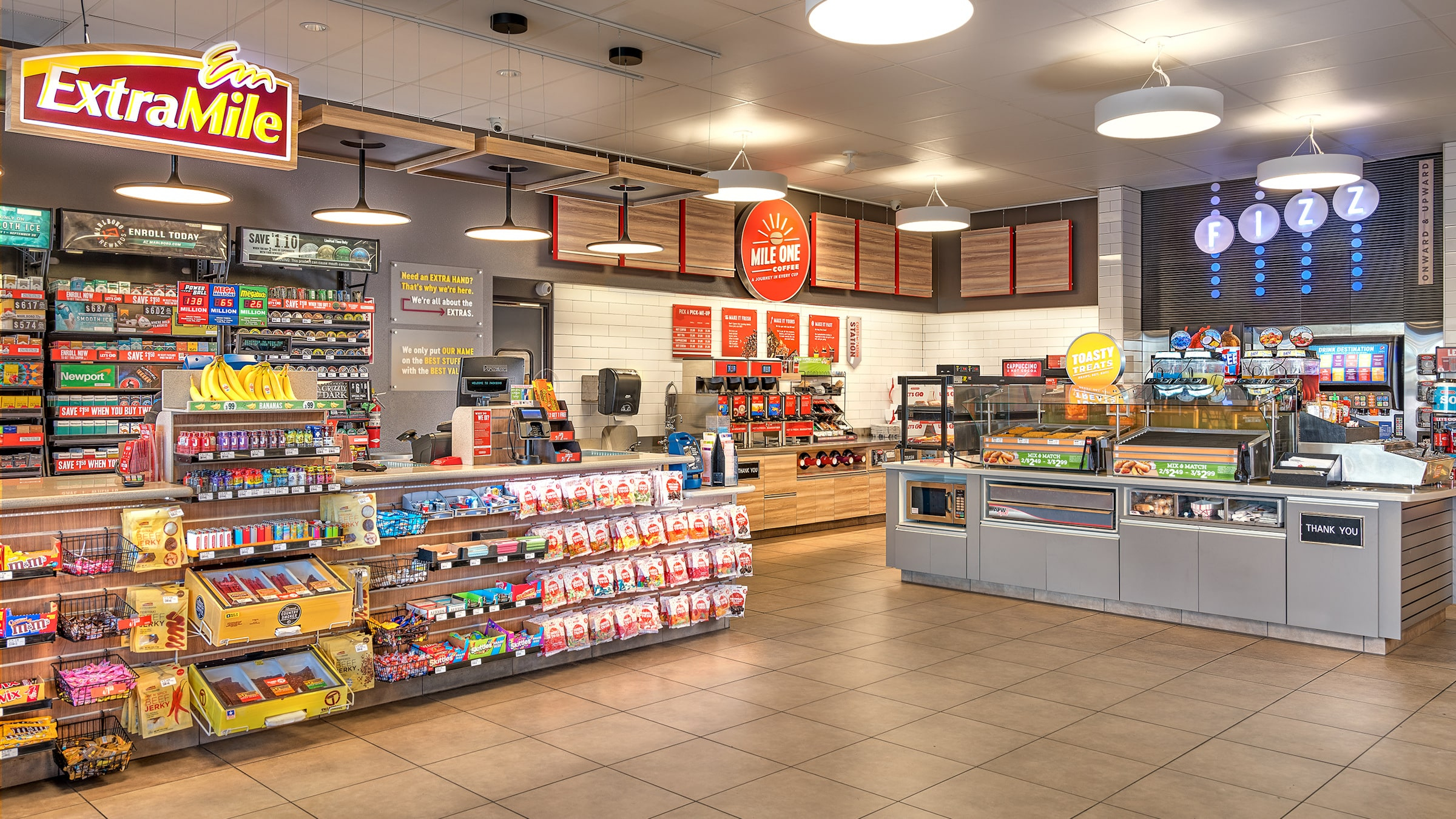
A compelling example of brand-driven design ROI is the multi-phase work KRS completed for ExtraMile—a joint venture between Chevron and Jacksons Food Stores, with over 800 locations across the western U.S.
Facing increased competition and evolving consumer behavior, ExtraMile needed a transformation to better engage its core audience—primarily younger, value-driven male shoppers. KRS was brought in to lead a comprehensive rebrand that addressed both aesthetic expression and strategic performance.
The work focused on aligning the store experience with ExtraMile’s five brand pillars:
- Extra Efficiency
- Extra Appreciation
- Extra Value
- Extra Effort
- Extra Convenience
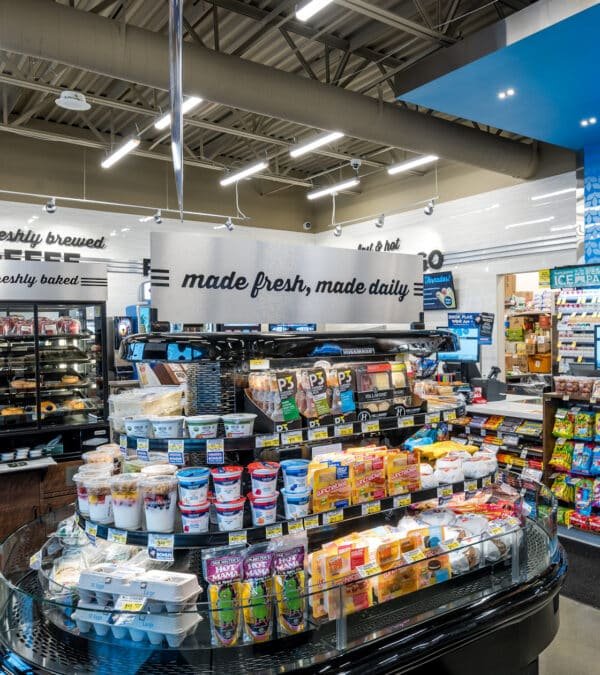
The new retail store design was not just a visual refresh—it was a strategic reinvention. KRS created a scalable store design that could be deployed across 300+ franchisee locations, offering consistency with enough flexibility for local customization. This approach ensured franchisees could roll out improvements cost-effectively while still aligning with the brand.
Private Label Branding: Mile One Coffee
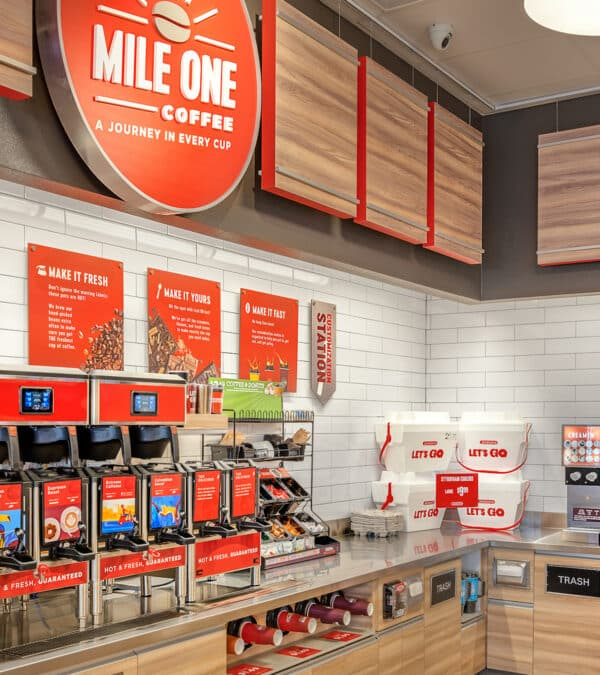
As part of the brand evolution, KRS developed and launched Mile One Coffee, a proprietary coffee concept that served as a brand-within-a-brand. KRS not only designed the merchandising and signage but also developed custom graphics and packaging for various coffee blends.
This initiative delivered more than just incremental revenue—it built an ownable experience that helped differentiate ExtraMile from competitors and deepened its connection with customers.
The ROI of Design with Purpose
The new store concept delivered on multiple fronts: customer satisfaction, employee engagement, and franchisee enthusiasm. Stores began attracting more diverse, younger customers that reflected changing western U.S. demographics, while employees reported that the new layout improved their ability to serve guests more effectively.
This case underscores that ROI in store design isn’t about one element—it’s about a system. ExtraMile’s success was rooted in the alignment of physical space, private-label innovation, and a clearly communicated brand promise.
How to Measure ROI from Retail Branding
Branding’s impact is best understood through holistic performance indicators, such as:
- Immediate and sustained sales lift
- Increases in foot traffic
- Growth in unique and return customers
- Visit duration
- Average transaction size
- Social and community engagement metrics
Test, Measure and Refine
Retailers should test, measure, and refine their efforts continuously. A/B testing can provide insight into what resonates. Flexible strategies allow for the brand to evolve alongside customer expectations, competitive shifts, and broader market trends.
The key is not to assign credit (or blame) to a single element—like a new paint color or signage font—but to evaluate how all components work together to move the needle.
Retail branding ROI FAQs
Have a different question? Let’s talk →
What is the ROI of retail branding in store design?
The ROI of retail branding measures the business impact of investments in brand identity, store design, messaging, and customer experience. It may include increased sales, higher foot traffic, larger average transaction values, stronger customer loyalty, and more repeat visits.
How does branding influence customer behavior in retail stores?
Strong retail branding shapes how customers perceive and interact with a store. A consistent, engaging brand experience can encourage longer visits, larger purchases, repeat trips, and stronger emotional connections with the brand.
What metrics help measure the ROI of branding in store design?
Key metrics include sales lift, foot traffic, average basket size, visit duration, repeat customer rate, conversion rate, and online and offline brand engagement. Tracking these metrics before and after a branding or store design initiative can help measure its impact.
Can a store redesign really improve sales?
Yes. A store redesign can improve sales when it strengthens the brand experience and makes the environment more engaging and effective for customers. For example, KRS’s work for ExtraMile—including a scalable store design and the Mile One Coffee concept—helped attract new customers, re-engage loyal shoppers, and deliver measurable sales growth.
The ROI of Store Design Series
- Part One: How Retail Branding Drives The ROI Of Store Design: Strategies, Metrics & Case Study
- Part Two: How Store Planning & Design Drive ROI In Retail: Strategy, Flow, And Measurable Impact
- Part Three: Design Integrity in Rollout: Where Great Ideas Live or Die